
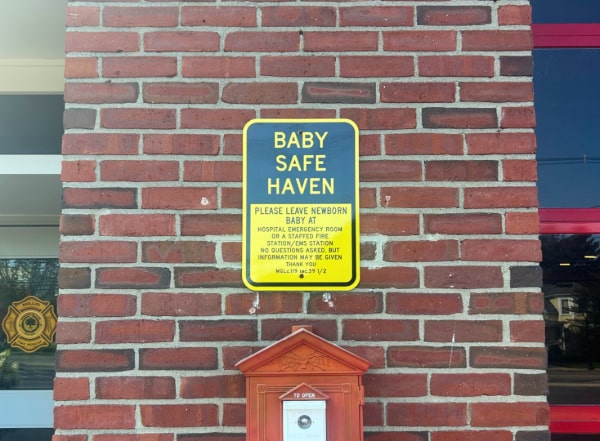
A Baby Safe Haven sign at the Millis Fire Department in Millis, Massachusetts
What are Safe Havens?
In Massachusetts, a Safe Haven is a designated location where a parent can legally and safely surrender a newborn, without any questions asked.
Thanks to the Baby Safe Haven Act (Chapter 227 of the Acts of 2004), parents who are overwhelmed, frightened, or unsure can place their newborn, 7 days old or younger, into the arms of someone who can ensure the child’s immediate safety, without fear of arrest or prosecution for abandonment.
This law was created to save lives and protect the most vulnerable: newborn babies who might otherwise be left in dangerous or life-threatening conditions.
Where can a baby be surrendered?
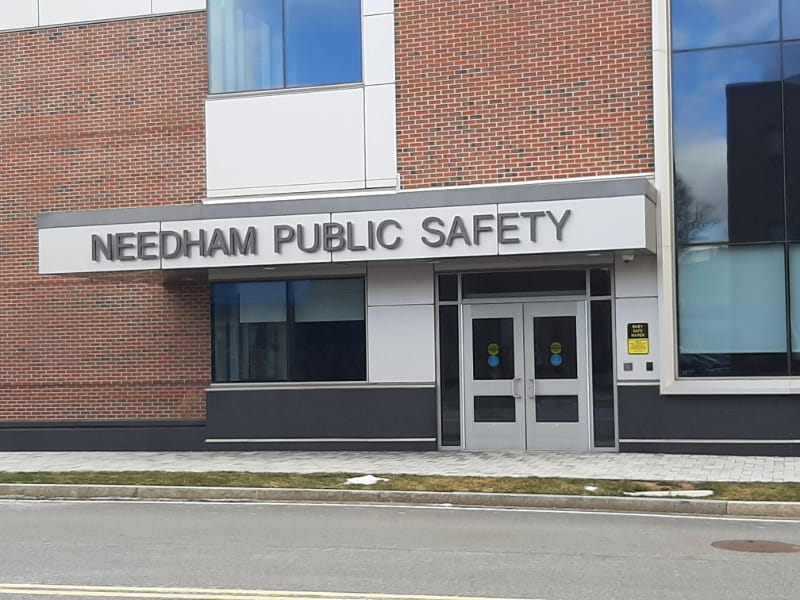
A Safe Haven sign at the Needham Police and Fire Station, placed by MCFL volunteer Mary Ellen De Winter in 2025.
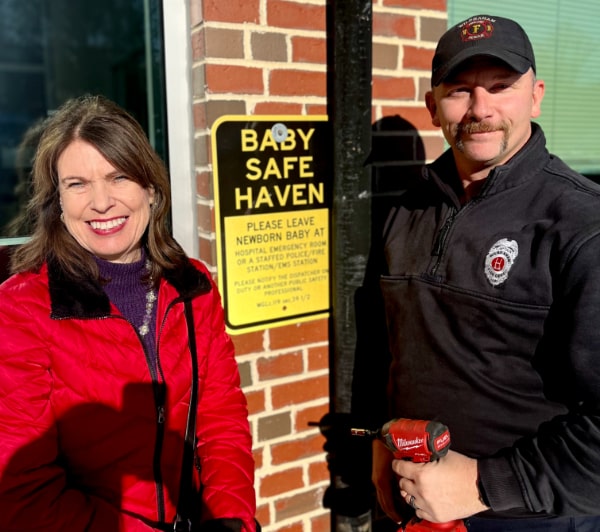
MCFL volunteer Celeste Ferris delivered a new Baby Safe Haven sign to the Wilbraham Fire Department, installed by Captain Anthony Arventos.
The law designates three types of Safe Haven facilities:
- Hospital emergency rooms
- Manned fire stations
- Police departments
Note: Make sure the fire or police station is staffed 24/7, as some small towns may not have round-the-clock coverage. Look for official Safe Haven signs—if a location displays one, it should be open at all times.
A parent may hand the baby to an appropriate person on duty, such as a triage nurse, duty officer, or firefighter. The person receiving the baby is trained to respond with compassion, prioritize the infant's health, and notify the Department of Children and Families (DCF) immediately.
What happens next?
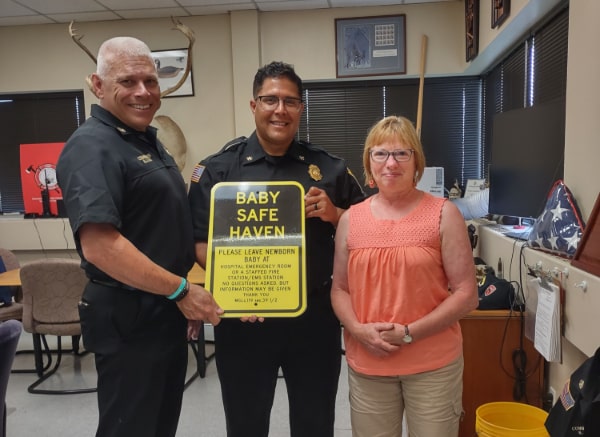
MCFL volunteer Christine Farrell delivers Safe Haven signs to Commissioner Bernard Calvi and Deputy Chief Miguel Rivera of the Springfield Fire Department
Once a newborn is safely surrendered:
- DCF takes custody immediately and ensures the baby receives medical attention.
- The baby is placed in a pre-adoptive or foster home that has been approved by the state.
- DCF works to ensure the baby’s long-term safety, stability, and permanent placement—ideally through adoption.
Surrendering a child under this law does not automatically terminate parental rights, but it may be considered abandonment if the parent does not come forward again. Parents are not required to provide identifying information, but are encouraged to share any medical or family history to help in the child’s future care.
Why it matters: This could be a baby’s only chance
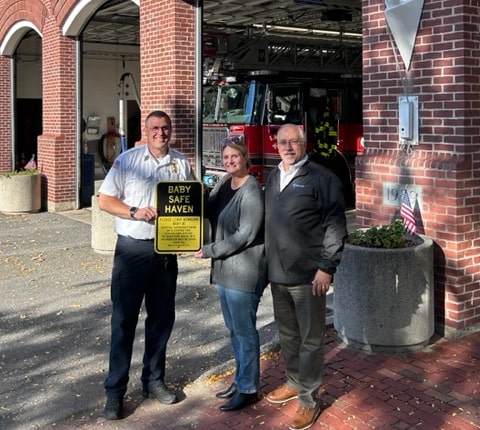
MCFL volunteers Karen and Ron Fotino delivering Safe Haven signs to Chief Richard Nelson of the Reading Fire Department
Every child deserves a chance at life, and every parent in crisis deserves a compassionate way forward.
MCFL believes that Safe Havens represent both mercy and hope. They are a tangible alternative to tragic outcomes. The Baby Safe Haven Law offers a lifesaving option for those who feel they have none.
Questions?
If you or someone you know is considering using a Safe Haven, or wants to learn more, visit the State of Massachusetts official website or call the Child-at-Risk Hotline at 1-800-792-5200 (24/7).
You can also contact us directly at MCFL. We're here to support life, every step of the way.
Help spread the word about Safe Havens
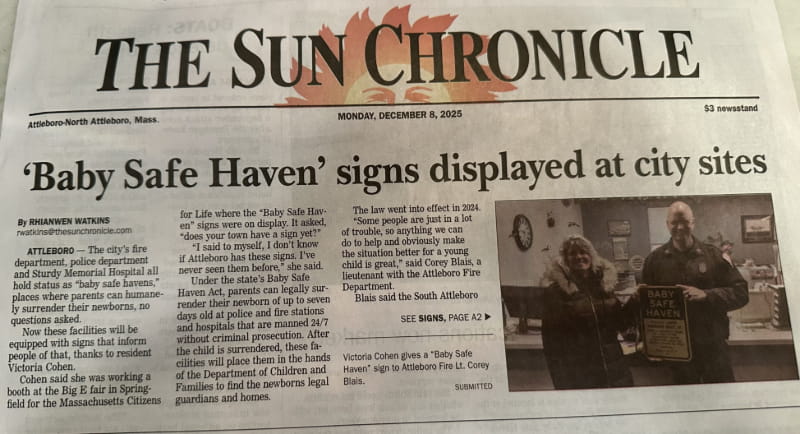
MCFL volunteer Victoria Cohen was featured on the front page of The Sun Chronicle (Attleboro, Massachusetts)
Across Massachusetts, too many parents in crisis still don’t know they have a safe, legal way to protect their newborn. The Baby Safe Haven Law offers that option, but only if people know it exists.
MCFL is equipping volunteers with free Safe Haven signs to display in hospitals, fire stations, police departments, and local gathering places. These signs raise awareness, offer hope, and may truly be the difference between life and loss.
You can help in two ways:
- Sign up in the form below to bring signs to your town
- Or make a donation to help cover printing and distribution costs statewide